
Car Stickers for Australian Businesses: The Complete Ordering Guide
Discover how Australian businesses can use custom car stickers for branding, events, and promotions. Tips on types, printing, and ordering.

Written by
Hudson Reyes
Seasonal & Holiday
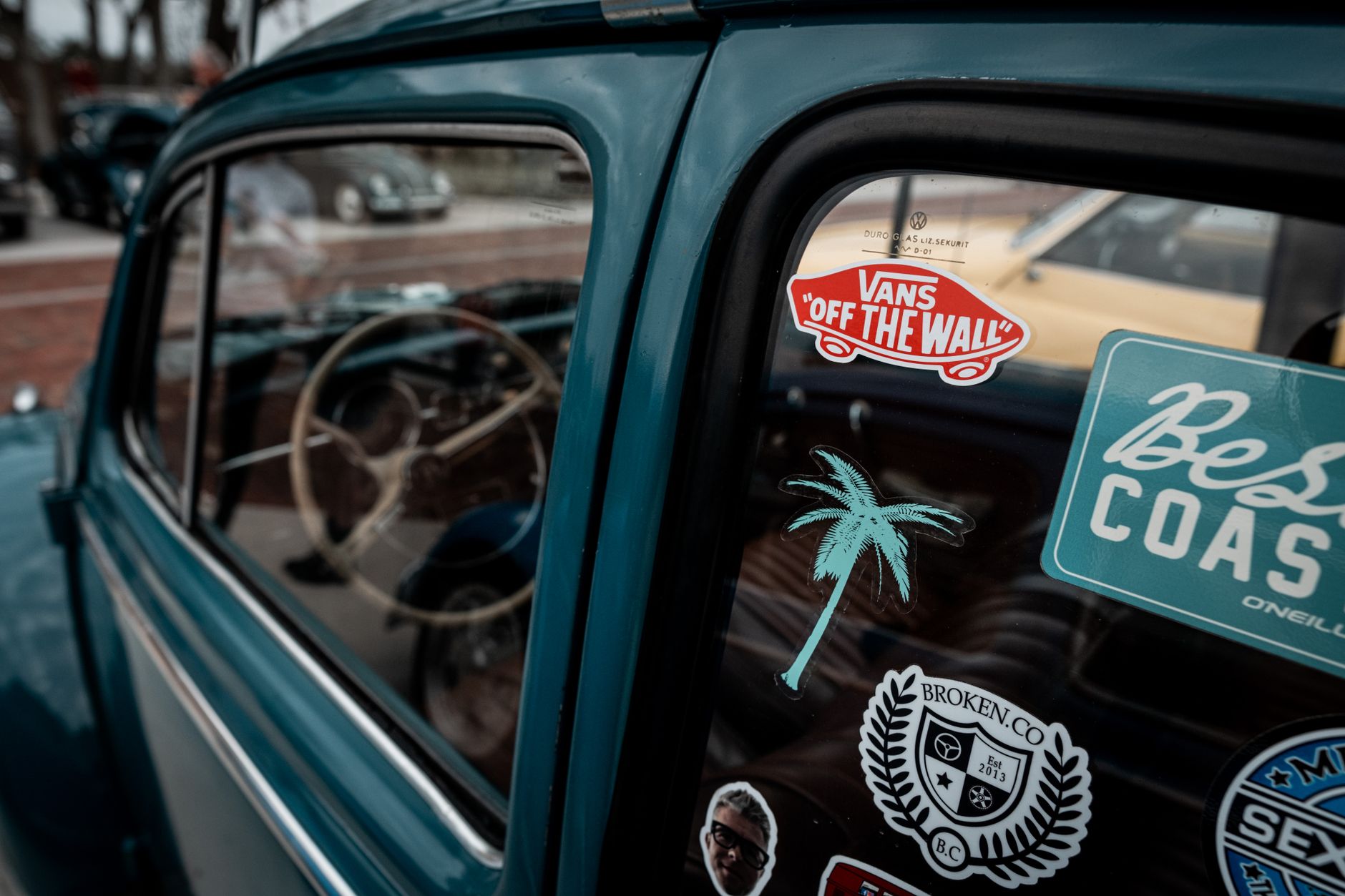
Every time a vehicle pulls into a car park or merges onto the M1, it’s a moving billboard — and savvy Australian businesses are taking full advantage. Car stickers have quietly become one of the most cost-effective branding tools available to organisations of all sizes, from sole traders in Darwin to large corporate fleets operating across Sydney and Melbourne. Whether you’re looking to brand a company vehicle, promote an event, or hand out logo stickers as part of a merchandise kit, understanding how car stickers work — and how to order them correctly — can make the difference between a polished result and a costly mistake.
Why Car Stickers Remain a Powerful Branding Tool in 2026
There’s a reason car stickers have stayed relevant despite the rise of digital marketing. They work passively, meaning your brand message is being communicated even when you’re not actively running a campaign. A fleet of five branded vehicles driving daily routes in Brisbane can generate thousands of visual impressions per week — all for a one-off investment.
For event planners, a run of branded car stickers distributed to attendees or sponsors extends the life of your event’s visibility well beyond the day itself. For charities and not-for-profits, car stickers are an affordable way to build awareness without stretching limited budgets. For retail and service businesses, they reinforce professionalism at every touchpoint.
Beyond visibility, car stickers are remarkably durable when produced correctly. High-quality vinyl stickers are engineered to withstand UV exposure, rain, and road grime — conditions that are especially harsh in Queensland and Western Australia. When you invest in the right product and printing process, a well-applied car sticker can look sharp for three to five years.
It’s also worth noting how car stickers complement a broader promotional merchandise strategy. Paired with branded merchandise like custom USB drives, thermos drinking bottles, or custom travel mugs, stickers can form part of a cohesive brand pack that reinforces your identity across multiple touchpoints.
Understanding the Different Types of Car Stickers
Not all car stickers are created equal, and choosing the right type for your application is the first critical step in the ordering process.
Vinyl Die-Cut Stickers
Die-cut stickers are cut to the exact shape of your logo or design, removing the background entirely. They create a clean, professional look that sits directly on the vehicle surface. These are ideal for rear windows, bumpers, and painted panels. Most suppliers offer these in durable outdoor-grade vinyl with a UV-resistant laminate.
Static Cling Stickers
Static cling stickers adhere to smooth surfaces using static electricity rather than adhesive, which means they can be repositioned and removed without leaving any residue. These are particularly popular for short-term promotions, event activations, and rental fleet branding where the vehicle needs to return to its standard appearance afterwards.
Magnetic Car Signs
Technically not a sticker, but often grouped in the same category, magnetic car signs are removable panels that attach to the vehicle door or panel. They’re ideal for tradies and service businesses that want to present a branded vehicle during working hours but prefer to remove signage after hours. A plumber in Adelaide or an electrician operating across Perth can switch between a branded and unbranded vehicle in seconds.
Full and Partial Vehicle Wraps
At the premium end of the spectrum, full vehicle wraps cover the entire exterior of the car in printed vinyl. Partial wraps cover specific sections — bonnet, doors, or the rear. These are significantly more involved in terms of production and installation, but for businesses with a strong visual brand, the impact is extraordinary.
Bumper Stickers and Window Stickers
Classic bumper stickers and rear-window decals remain popular for community organisations, sporting clubs, and event merchandise. They’re affordable, easy to distribute, and tend to attract genuine engagement when the design is clever or cause-driven. These also work well as giveaway items at trade shows and conferences.
For a broader look at what’s possible in the sticker and decal category, our complete guide to stickers in Australia and our resource on stickers for print cover a wide range of applications and design considerations.
Decoration Methods and Print Quality
The printing process used to produce your car stickers has a direct impact on their durability, colour accuracy, and overall finish.
Digital printing is the most common method for car stickers. It allows for full-colour designs with photographic detail, making it suitable for complex logos, gradients, and multi-colour artwork. Modern wide-format digital printers produce vibrant, consistent results on vinyl substrates.
Screen printing is occasionally used for simpler designs with fewer colours, particularly on larger quantities. If you’re curious about how screen printing and digital printing compare for turnaround and quality, our post on turnaround times for screen printing vs digital printing goes into helpful detail.
Lamination is strongly recommended for any sticker that will live on the exterior of a vehicle. Gloss laminate adds vibrancy and protects against scratches, while matte laminate gives a more understated, premium look. UV-resistant laminate is particularly important for vehicles in Queensland, the Northern Territory, and regional Western Australia where sun exposure is intense.
PMS colour matching is worth discussing with your supplier if your brand has specific colour standards. For corporate organisations and franchise businesses especially, consistent colour reproduction across all materials — from car stickers to branded polo shirts and sublimation shirts — is essential for brand integrity.
Artwork Requirements and How to Prepare Your Files
Getting your artwork right before you go to print will save time, money, and frustration. Here’s what most suppliers require for car sticker production:
- Vector artwork (AI, EPS, or PDF format) is strongly preferred for logos and text, as it scales without any loss of quality
- High-resolution raster files (300 DPI minimum at print size) are acceptable for photographic elements
- Outlined fonts — all text should be converted to outlines or curves to avoid font substitution issues
- Correct colour mode — CMYK for print (not RGB, which is used for screens)
- Bleed and safe zones — especially important for shaped or die-cut stickers
If your artwork isn’t print-ready, many suppliers offer artwork redraw services at an additional cost. It’s worth building this into your budget and timeline if you’re working from a low-resolution logo.
Minimum Order Quantities, Pricing, and Turnaround
Car stickers are generally one of the more accessible promotional products in terms of minimum order quantities. Many digital print suppliers will produce runs as low as 25–50 units, making them viable for small businesses and community organisations.
Bulk pricing kicks in at higher quantities — typically 250, 500, and 1,000 units — and the per-unit cost drops significantly. For large-scale fleet branding or conference giveaways, ordering in volume is almost always the smarter financial decision.
Turnaround times vary depending on complexity and quantity:
- Simple die-cut stickers: 5–10 business days production, plus freight
- Full vehicle wraps: 1–3 weeks depending on design complexity and installation scheduling
- Rush orders: available from some suppliers at a premium, but artwork must be print-ready and approved quickly
For organisations planning around a specific event date — say, a Gold Coast expo or a Melbourne product launch — it’s wise to order at least three to four weeks in advance to allow buffer time for artwork revisions and shipping to regional areas.
Car Stickers as Part of a Broader Merchandise Strategy
Car stickers work exceptionally well when combined with other branded merchandise, particularly for event kits, onboarding packs, and promotional giveaways. A new franchisee kit might include branded stickers alongside items like varsity jackets, a wide-brimmed hat, and a gym towel — creating a cohesive welcome package that reinforces the brand from day one.
For businesses with an eco-conscious brand positioning, there are environmentally responsible sticker options made from recycled or biodegradable materials. Pairing these with recycled PET marketing giveaways or eco-friendly straw tote bags creates a merchandise suite that aligns with sustainability values.
If you’re a reseller or agency sourcing car stickers on behalf of clients, it’s worth exploring how white label promotional products can be integrated into your offering, particularly for clients with ongoing fleet branding needs.
For corporate clients with premium vehicle collections or executive team vehicles, car stickers can complement higher-end branding solutions. Think about how a branded Titleist golf bag or waterproof branded bag for a client gift might sit alongside professionally branded vehicle signage — all working together to project a consistent, high-quality brand image.
Don’t overlook the vehicle logo category more broadly, which includes decals, magnetics, and signage designed specifically for fleet and commercial vehicle applications.
Application and Maintenance Tips
Even the best-quality sticker will underperform if it’s applied incorrectly. Here are a few practical tips for getting the best result:
- Clean the surface thoroughly before application — any dust, grease, or wax residue will prevent proper adhesion
- Apply in mild temperatures — extreme heat or cold affects both the adhesive and the vinyl’s flexibility during application
- Use a squeegee to remove air bubbles, working from the centre outward
- Allow cure time — most adhesive vinyl benefits from 24–48 hours before exposure to heavy rain or washing
- Avoid automated car washes with harsh brushes on exterior sticker panels, particularly for vehicle wraps
For fleet managers responsible for multiple vehicles, it’s worth creating an internal application guide so stickers are applied consistently across the fleet.
Conclusion: Key Takeaways for Ordering Car Stickers
Car stickers are a genuinely versatile, cost-effective branding tool that Australian businesses and organisations continue to underutilise. When ordered correctly and applied well, they deliver consistent brand exposure with minimal ongoing investment.
Here are the key points to take away:
- Choose the right sticker type for your application — die-cut vinyl for permanent branding, static cling for temporary use, and magnetic signs for flexibility
- Invest in quality materials and lamination to ensure durability in Australia’s harsh outdoor conditions, particularly in high-UV states and territories
- Prepare print-ready vector artwork before approaching a supplier to avoid delays and additional costs
- Order well in advance of your event or launch date — aim for at least three to four weeks to allow for production, freight, and any last-minute revisions
- Integrate car stickers into a broader merchandise strategy to maximise brand cohesion across multiple channels and touchpoints
Whether you’re branding a single company van in Hobart or rolling out signage across a national fleet, getting the fundamentals right will ensure your car stickers look professional, last the distance, and keep working for your brand long after they’re applied.