
Customised Tea Towels: The Complete Guide for Australian Businesses and Organisations
Discover how customised tea towels can elevate your brand, delight customers, and serve as practical promotional products for Australian businesses.

Written by
Connor Dupont
Corporate Gifts
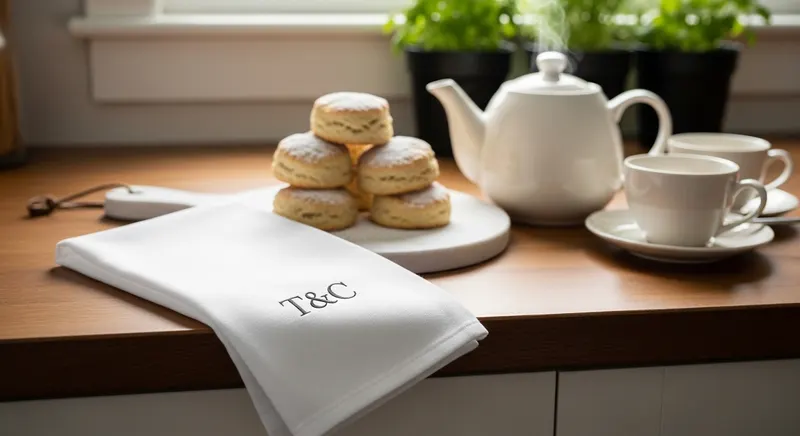
Customised tea towels might not be the first thing that comes to mind when you’re planning a branded merchandise strategy — but that’s exactly what makes them such a smart choice. Practical, long-lasting, and used in spaces where people spend a surprising amount of time (kitchens, cafés, event stalls, staff break rooms), a well-designed tea towel delivers consistent brand visibility in a way that a pen or keyring simply can’t match. Whether you’re running a café in Melbourne, organising a community fundraiser on the Gold Coast, or sourcing corporate gifts for a Sydney-based hospitality business, customised tea towels offer genuine everyday utility paired with a generous print area that lets your branding shine.
Why Customised Tea Towels Deserve a Spot in Your Merch Strategy
The promotional products industry often celebrates the “useful gift” — and tea towels tick that box definitively. Unlike some branded items that end up in a drawer after a week, a quality tea towel gets used repeatedly. That means repeated brand impressions at zero additional cost to you after the initial investment.
Consider the maths: a branded tea towel used five times per week, for even a single year, generates hundreds of touchpoints with one recipient alone. Scale that across a batch of 250 units ordered for a product launch, and the reach becomes genuinely impressive.
Beyond raw visibility, customised tea towels carry a certain premium feel when executed well. A beautifully printed tea towel with a clever design — think seasonal illustrations, local landmarks, recipe prints, or a bold brand pattern — can elevate a product from “promotional giveaway” to “something I actually want to keep.” That distinction is critical for organisations looking to build emotional brand affinity, not just awareness.
Who Should Consider Branded Tea Towels?
The versatility of customised tea towels means they suit a wide range of buyers. Here are some of the most common and effective use cases:
- Hospitality businesses – Cafés, restaurants, and catering companies across Brisbane and Adelaide often use branded tea towels for both staff use and retail sale. A well-designed tea towel alongside your branded travel mugs and custom drinkware creates a compelling café merchandise range.
- Food producers and artisan brands – Farmers’ market vendors, specialty food producers, and boutique wineries frequently gift or sell branded tea towels as part of their product offering.
- Schools and P&C groups – Primary and secondary schools across Australia regularly order customised tea towels as fundraising items. A Perth primary school, for example, might sell illustrated tea towels featuring student artwork as an annual fundraiser.
- Not-for-profits and community groups – Charities and community organisations use branded tea towels as low-cost, high-appeal merchandise for fetes, galas, and awareness campaigns.
- Corporate gifting programs – When paired with other kitchen or lifestyle items — think branded thermos drinking bottles or custom mugs — a tea towel can anchor a thoughtful corporate gift hamper.
- Events and conferences – Tea towels make distinctive delegate gifts for food-focused events, cooking demonstrations, and trade expos.
Choosing the Right Material for Your Customised Tea Towels
Material selection is one of the most important decisions you’ll make when ordering, and it directly impacts both print quality and end-user satisfaction. Here are the most common options available through Australian promotional product suppliers:
Cotton Tea Towels
Pure cotton remains the most popular choice for good reason. It’s highly absorbent, durable, and takes print very well — particularly screen printing. A standard cotton tea towel typically measures around 50 x 70 cm, giving you a substantial print area for detailed artwork. Cotton is also the go-to choice for fundraising tea towels, largely because it offers the best balance of cost, quality, and printability.
Linen and Cotton-Linen Blends
Linen blends offer a slightly more textured, premium feel. They’re popular for boutique retail merchandise and artisan brand applications where the aesthetic carries weight. Linen does carry a slightly higher unit cost, but it photographs beautifully — an important consideration if your tea towel will be sold online or featured in marketing imagery.
Microfibre
Microfibre tea towels are growing in popularity, particularly for corporate gifting. They’re lightweight, fast-drying, and can be rolled or folded into compact presentation packaging. Microfibre is also commonly used for gym towels and sports applications, so if your brand spans both gym and kitchen audiences, it’s worth considering.
Decoration Methods: How Your Design Gets onto the Towel
Getting your artwork onto the tea towel is where the magic happens — and the method you choose affects the final look, feel, and budget significantly.
Screen Printing
Screen printing is the most widely used method for customised tea towels. It produces crisp, vibrant results across large areas and is cost-effective at higher quantities — typically from 100 units upward. Screen printing works best with solid colours and bold designs rather than fine gradients or photographic imagery. It’s the standard choice for fundraising orders and event merchandise. For a deeper understanding of how screen printing compares to other methods in terms of timing, our guide on turnaround times for screen printing vs digital printing is worth a read before you commit.
Digital Printing (DTG and Sublimation)
Digital printing allows for full-colour, photo-quality reproduction across the entire surface of the tea towel — making it ideal for detailed illustrations, complex patterns, or all-over designs. Sublimation printing, in particular, is well-suited to polyester-blend tea towels and produces stunning results with no minimum feel to the print. If your brand has nuanced artwork or you want edge-to-edge coverage, explore how sublimation printing works for custom products to understand whether it’s the right fit for your project.
Heat Transfer
Heat transfer is a good option for small runs or where personalisation (like individual names or numbers) is required. It has a slightly higher unit cost than screen printing at volume but offers flexibility that bulk methods can’t match.
Minimum Order Quantities, Lead Times, and Budgeting
If you’re new to ordering customised tea towels, understanding the practical logistics will save you time, money, and frustration.
Minimum Order Quantities (MOQs)
Most Australian suppliers work with MOQs of 50 to 100 units for screen-printed cotton tea towels. Digital and sublimation methods sometimes allow lower MOQs — occasionally as few as 10 to 25 units — but expect a higher unit price at those quantities. For fundraising orders in schools, communities, and clubs, quantities of 200 to 500 units are common and unlock meaningful bulk pricing tiers.
Lead Times
Allow a minimum of 10 to 15 business days from artwork approval for standard orders. If you’re ordering for a specific event — a Hobart food festival, a Darwin school fete, or a Canberra charity gala — build in buffer time of at least two to three weeks on top of standard production. Rush orders are sometimes available at an additional cost, but it’s always better to plan ahead.
Budget Considerations
Unit pricing for customised tea towels in Australia typically ranges from $4 to $12 depending on material, decoration method, quantity, and number of print colours. At 250 units with a two-colour screen print on cotton, you might expect to land in the $6–$8 per unit range including setup. Always request itemised quotes that include setup fees, freight, and GST — these can meaningfully affect your total cost if not accounted for upfront.
Design Tips for Customised Tea Towels That People Actually Keep
A great tea towel isn’t just a vehicle for your logo — it’s a functional piece of design that lives in someone’s home. These tips will help you create something people genuinely want to use.
Lead with illustration or pattern. The most popular tea towels feature bold, attractive visuals. A local landmark, a food illustration, a seasonal motif — these resonate far more than a plain white towel with a small logo in the corner.
Include useful content. Recipe tea towels, conversion charts, or care guides are particularly effective because they give the towel a secondary purpose. A cooking school or food brand, for instance, might print a signature recipe alongside their branding.
Work with your colour palette. Tea towels offer excellent colour accuracy with modern printing methods, so take advantage of your brand’s palette. PMS matching ensures consistency with your other branded materials — everything from your custom stickers to your branded workwear.
Don’t overcrowd the design. White space is your friend. A clean, well-balanced layout will always outperform a cluttered one when it comes to shelf appeal and longevity.
Consider packaging. A rolled tea towel tied with ribbon, or paired with a branded tag, adds perceived value instantly — especially for retail or gifting purposes. If you’re building a merchandise bundle, customised tea towels pair well with items like branded tote bags or personalised tea towel sets.
Using Customised Tea Towels as Part of a Broader Merchandise Mix
Customised tea towels work brilliantly as standalone items, but they really shine when they’re part of a cohesive merchandise offering. For a café or food brand, that might mean pairing them with custom travel mugs and branded packaging. For a school fundraiser, they might sit alongside custom stationery items and branded stickers as part of a broader merchandise table.
Organisations looking at a full merchandise refresh might also want to explore white label promotional products for reseller programs if they’re considering ongoing product lines rather than one-off campaigns.
Corporate teams building gift hampers for clients could complement tea towels with items like USB drives or winter branded blankets and beanies — creating a practical, well-rounded gift that covers multiple seasons and settings.
Conclusion: Key Takeaways for Ordering Customised Tea Towels
Customised tea towels represent one of the most underrated opportunities in Australian branded merchandise. They combine genuine utility, generous branding space, broad audience appeal, and strong perceived value — all at an accessible price point. Whether you’re a Melbourne café looking to add retail merchandise, a Queensland school running its annual fundraiser, or a Sydney corporate team building a client gift hamper, a well-executed tea towel can do a lot of heavy lifting for your brand.
Here are the key points to take away from this guide:
- Material matters: Cotton is the most practical and popular choice for most applications; linen blends offer a premium aesthetic; microfibre suits lighter, more compact use cases.
- Choose your decoration method wisely: Screen printing delivers great value at volume for bold designs; digital and sublimation printing open the door to full-colour, detailed artwork with lower MOQs.
- Plan for lead times: Always allow at least 10–15 business days from artwork approval, and build in buffer time when ordering for specific events or campaigns.
- Design for longevity: The best customised tea towels feature attractive visuals, useful content, or compelling patterns that people want to display — not just a logo on a white background.
- Think beyond the standalone product: Customised tea towels perform best as part of a coordinated merchandise range, pairing naturally with drinkware, tote bags, and branded apparel.