
Promotional Clothing Australia: The Complete Guide to Branded Apparel for Your Organisation
Discover how to choose, order, and budget for promotional clothing in Australia. Expert tips on decoration methods, MOQs, and product selection.

Written by
Mason Park
Custom Apparel
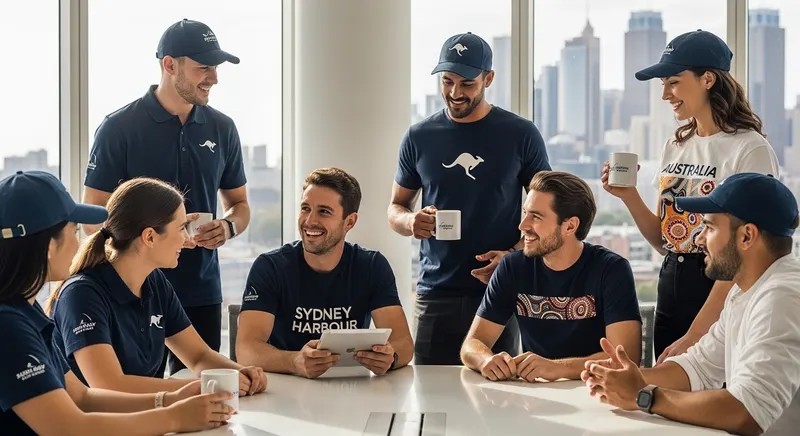
Promotional clothing is one of the most powerful and enduring tools in any organisation’s branding arsenal. Whether you’re a Sydney-based corporate team kitting out staff for a product launch, a Brisbane primary school ordering custom sports day shirts, or a Melbourne events company sourcing branded uniforms for a major conference, the right apparel turns every wearer into a walking advertisement. Unlike a flyer that gets tossed in the bin or a digital ad that disappears after five seconds, a well-made branded garment keeps your logo front and centre for months — sometimes years — after it’s handed out. But navigating the world of promotional clothing in Australia can feel overwhelming without the right guidance. This comprehensive guide breaks down everything you need to know.
Why Promotional Clothing Australia Remains a Cornerstone of Brand Strategy
There’s a reason branded apparel consistently ranks among the top-performing promotional product categories. Clothing is universally useful. People wear it every single day. And when your logo or message is on a garment that someone genuinely enjoys wearing — because it fits well, looks good, and feels comfortable — they become an organic brand ambassador without even thinking about it.
In Australia’s diverse market, promotional clothing serves an enormous range of purposes. A Perth mining company might need bright hi-vis polo shirts for site safety compliance. A Gold Coast surf school might want sublimated rash shirts in bold, ocean-inspired colours. A Canberra government department might order embroidered navy polo shirts for public-facing staff. The applications are virtually limitless, and that versatility is precisely what makes promotional clothing such a worthwhile investment.
Research consistently shows that branded apparel generates more impressions per dollar than almost any other advertising format. A quality hoodie or polo shirt worn around an office, at a weekend market, or at the school drop-off generates repeated brand exposure that paid media simply cannot replicate with the same sense of authenticity.
It’s also worth noting that promotional clothing pairs beautifully with complementary merchandise. Combining apparel with items like custom travel mugs or branded USB drives creates cohesive merchandise packs that are particularly effective at conferences, trade shows, and staff onboarding events.
Choosing the Right Garment for Your Audience and Purpose
One of the most critical decisions in any promotional clothing project is selecting the right product for your specific audience and use case. Getting this wrong — ordering a heavy cotton crew neck for a Darwin outdoor event in February, for instance — can mean staff and recipients simply don’t use the item. That’s money wasted.
T-Shirts and Polo Shirts
T-shirts are the workhorses of promotional clothing in Australia. They’re affordable, widely available in bulk, and suitable for decoration via screen printing, digital printing, or heat transfer. For corporate environments, polo shirts offer a step up in perceived quality and professionalism, making them ideal for trade show booths, retail staff uniforms, and hospitality teams.
When selecting t-shirts or polos, consider fabric weight and composition. A 180gsm cotton tee is fine for a casual event giveaway, but for staff uniforms that need to withstand daily washing, look at 200gsm or above, or consider a cotton-polyester blend for added durability and colour retention.
Hoodies, Jumpers, and Jackets
As cooler months arrive across southern states, branded outerwear becomes a genuinely appreciated gift. A quality embroidered fleece hoodie or corporate zip-through jacket is something recipients will wear regularly throughout autumn and winter. If you’re planning a staff winter gifting campaign, our guide to winter branded blankets and beanies for staff gifts is worth reading alongside your outerwear selection process.
Caps and Hats
Headwear is a perennial favourite in Australian promotional clothing campaigns, particularly for outdoor events, sporting clubs, and trade-focused businesses. Structured caps suit embroidery beautifully, while wide-brimmed hats are increasingly popular for outdoor workers and sun-smart initiatives in schools and councils.
Varsity and Premium Jackets
For universities, sporting associations, and premium corporate gifting, varsity jackets have made a significant comeback as a high-perceived-value promotional garment. They’re a standout option when you want recipients to truly treasure the item.
Hi-Vis and Workwear
Safety workwear is a specialist category within promotional clothing that’s particularly relevant for construction, logistics, mining, and utilities sectors. Hi-vis vests, long-sleeve shirts, and jackets must meet Australian safety standards (AS/NZS 4602.1), so always confirm compliance with your supplier before placing an order.
Decoration Methods: What Works Best for Promotional Clothing
The decoration method you choose has a significant impact on the final look, durability, and cost of your promotional clothing. Here’s a breakdown of the main options used across Australia:
Screen Printing
Screen printing is the gold standard for large runs of promotional clothing with bold, solid-colour designs. It’s cost-effective at volume (typically from 50 units), produces vibrant, durable results, and is particularly suited to t-shirts, polos, and tote bags. Setup fees apply per colour, so designs with fewer colours will be more economical. For a detailed comparison of production timelines, see our breakdown of turnaround times for screen printing vs digital printing.
Embroidery
Embroidery delivers a premium, professional finish that’s ideal for polo shirts, caps, corporate jackets, and workwear. It’s highly durable — the stitching holds up through repeated commercial washing — and conveys a sense of quality that resonates with corporate and government clients. Note that embroidery works best with simpler designs; very fine detail or gradient effects aren’t achievable with thread.
Sublimation Printing
Sublimation involves infusing dye directly into polyester fabric, producing full-colour, edge-to-edge designs with exceptional vibrancy. It’s the go-to method for sportswear, jerseys, and any garment where all-over print coverage is needed. The limitation is that sublimation only works on white or light-coloured polyester-based fabrics.
Heat Transfer and Digital Printing
Heat transfer and direct-to-garment (DTG) digital printing are excellent for shorter runs or designs with multiple colours and photographic detail. They’re more flexible than screen printing in terms of minimum order quantities, often starting from as few as 10–20 units, making them practical for smaller organisations or event-specific runs.
Minimum Order Quantities, Budgeting, and Lead Times
Understanding the commercial realities of promotional clothing orders in Australia will save you from nasty surprises.
Minimum Order Quantities (MOQs): For screen printing, MOQs typically sit at 25–50 units. Embroidery often starts from around 12–24 units. Digital printing and heat transfer can accommodate quantities as low as 10. Sublimation sportswear may require 20–50 units per design depending on the supplier.
Pricing: Expect to pay anywhere from $8–$15 per unit for a basic screen-printed t-shirt at 100 units, through to $35–$80+ for a premium embroidered polo or corporate jacket. Pricing drops significantly with volume. Always factor in setup fees (ranging from $30–$150 per colour for screen printing) when calculating your total budget.
Lead Times: Standard turnaround for promotional clothing in Australia is typically 10–15 business days from artwork approval. Rush services are available from many suppliers but attract additional fees. If your event is time-sensitive, build in at least two to three weeks of buffer to allow for proof approvals, production, and delivery.
Artwork Requirements: Most suppliers require vector files (AI, EPS, or PDF) for embroidery and screen printing. For digital and sublimation printing, high-resolution PNG or PDF files are generally acceptable. If your artwork isn’t ready, many suppliers offer artwork assistance for a fee.
It’s also worth exploring whether a white label promotional products approach suits your needs if you’re sourcing clothing at scale for resale or corporate gifting programmes.
Eco-Friendly Promotional Clothing: A Growing Priority
Australian organisations across every sector are increasingly asking for more sustainable options in their promotional clothing choices. This reflects genuine consumer values as well as corporate responsibility commitments. The good news is that the range of eco-friendly garments has expanded dramatically.
Look for t-shirts and totes made from organic cotton, recycled PET fabric (made from plastic bottles), or bamboo blends. These materials are increasingly cost-competitive with conventional options, and suppliers certified under GOTS (Global Organic Textile Standard) or OEKO-TEX provide added assurance of ethical production. For a broader look at sustainable merchandise choices, our guide to sustainable products for organisations covers the category in depth.
Combining eco-friendly promotional clothing with complementary sustainable items — like straw tote bags or personalised tea towels — creates cohesive, values-aligned merchandise ranges that resonate strongly with environmentally conscious audiences.
Promotional Clothing Australia: Making Your Campaign Work Harder
Getting the most from your promotional clothing investment goes beyond simply ordering garments with a logo. Here are some strategies to amplify the impact of your campaign:
Bundle with complementary products. Pairing a branded polo with a thermos drinking bottle or a custom gym towel creates a high-perceived-value gift that recipients genuinely use together.
Plan for size diversity. Always order a thoughtful size range. Failing to cater for all body types is one of the most common complaints about promotional clothing distribution. Include XS through to 3XL as a minimum range where possible.
Consider seasonal timing. Hoodies and beanies are appreciated in winter; lightweight tees and caps work beautifully for summer events and outdoor activations. Timing your order to match seasonal use dramatically increases wear frequency.
Think beyond the launch. Promotional clothing ordered for a product launch or event can continue serving as a brand asset if you plan ahead — for instance, ordering extra units for new staff onboarding or as prizes and giveaways throughout the year.
Complement your apparel with other branded touchpoints. Many organisations enhance their brand presence by also investing in vehicle logos and wraps, branded umbrellas, or even waterproof bags that carry branding into new environments.
Conclusion: Key Takeaways for Ordering Promotional Clothing in Australia
Promotional clothing in Australia offers one of the strongest returns on investment of any branded merchandise category. When planned well, it builds brand recognition, fosters team cohesion, and keeps your organisation visible across every environment your people enter. Here are the key points to carry forward:
- Match the garment to the occasion and audience — fabric weight, style, and fit matter as much as the logo placement
- Choose the decoration method that suits your design and quantity — screen printing for volume, embroidery for premium, digital for flexibility
- Budget accurately by including setup fees, freight, and GST — the per-unit price is rarely the full cost
- Allow sufficient lead time — a minimum of three weeks from brief to delivery is a safe planning assumption for most orders
- Explore eco-friendly options — sustainable promotional clothing is increasingly accessible at competitive price points and aligns with modern brand values
Whether you’re a small Adelaide not-for-profit ordering 50 volunteer t-shirts or a national corporation rolling out uniforms across eight states, the fundamentals remain the same: choose quality, plan ahead, and make sure every garment tells your brand story clearly and confidently.